Plenary Speakers
Meet Your Plenary Speakers:
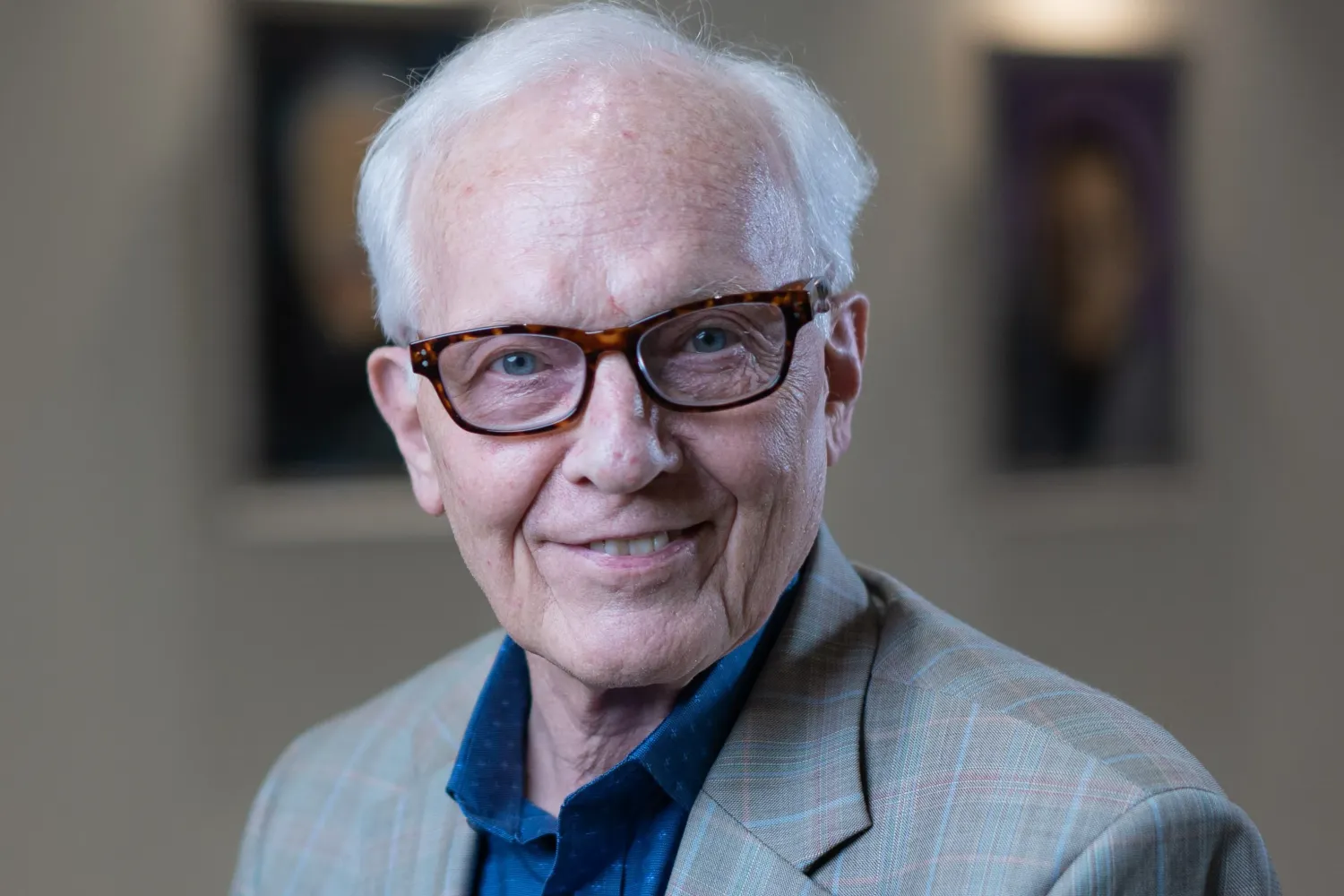
Paul Corkum, University of Ottawa, Canada
Paul graduated from Lehigh University, USA, in 1972 with a Ph.D. in theoretical physics. In 1973 he joined the staff of the National Research Council of Canada where he built one of the world’s most famous groups working on the interaction of very short light pulses with matter. Corkum introduced how intense light interacts with atoms, molecules and solids, and confirmed it experimentally. His recollision model combines collision and plasma physics with optics, allowing a new measurement approach for each field. The production and measurement of the world’s shortest light pulses derive from his theoretical research.
Corkum is a Full Professor of Physics, a Distinguished Research Chair at the University of Ottawa and directs the Joint NRC/University of Ottawa Attosecond Science Laboratory. He is a member of the Royal Societies of London and of Canada and also a foreign member of the US National Academy of Science, the Austrian Academy of Science, and the Russian Academy of Sciences.
Among his many honours and recognitions, he has received the 2017 Royal Medal, for his major contributions to laser physics and the development of the field of attosecond science, as well as the National Research Council of Canada’s Schneider Medal, their highest distinction bestowed upon employees. In 2018, Corkum was awarded both the SPIE Gold Medal, and the Isaac Newton Medal and Prize from the UK Institute of Physics, and is a recipient of the 2019 Willis E. Lamb Award for Laser Science and Quantum Optics. The Wolf Foundation selected Corkum as a 2022 Wolf Prize Laureate in Physics and in 2023 he was co-recipient of the BBVA Foundation 15th Edition Frontiers of Knowledge Award in Basic Sciences. Recently, Corkum was awarded the 2025 APS Medal for Exceptional Achievement in Research (the society’s top award), and is the 2026 IEEE/RSE James Clerk Maxwell Medal recipient.
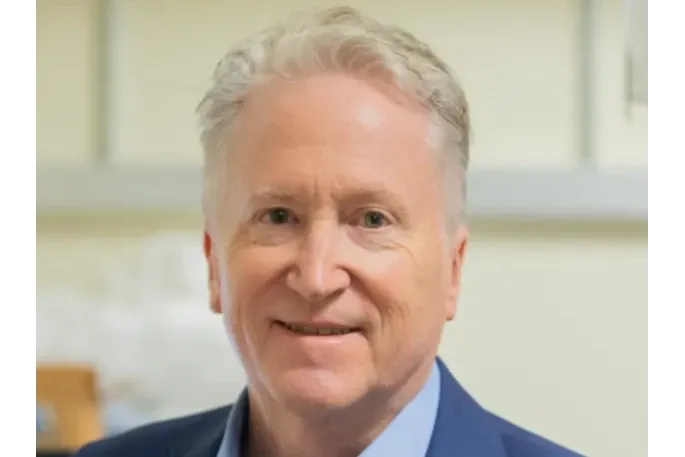
Kerry Vahala, California Institute of Technology, USA
Kerry has pioneered nonlinear optics in high-Q optical microresonators. His work includes the first demonstration of parametric oscillation and cascaded four-wave mixing in a microcavity—the central regeneration mechanisms underlying optical frequency microcombs—and the earliest demonstrations of these devices in optical clocks, frequency synthesis, spectroscopy, and Astro combs.
Vahala is a Professor of Applied Physics and the Jenkins Professor of Information Science and Technology. He is a member of the National Academy of Engineering and a Fellow of both IEEE and Optica. His other honors include the Charles Hard Townes Medal from Optica for work on micro resonators and nonlinear oscillators; the IEEE David Sarnoff Medal for research on quantum-well laser dynamics; the Alexander von Humboldt Award for advancements in ultra-high-Q optical microcavities; a NASA Achievement Award for the application of microcombs to exoplanet detection; and the Optica Paul F. Forman Team Engineering Excellence Award for the development of a two-photon optical clock.
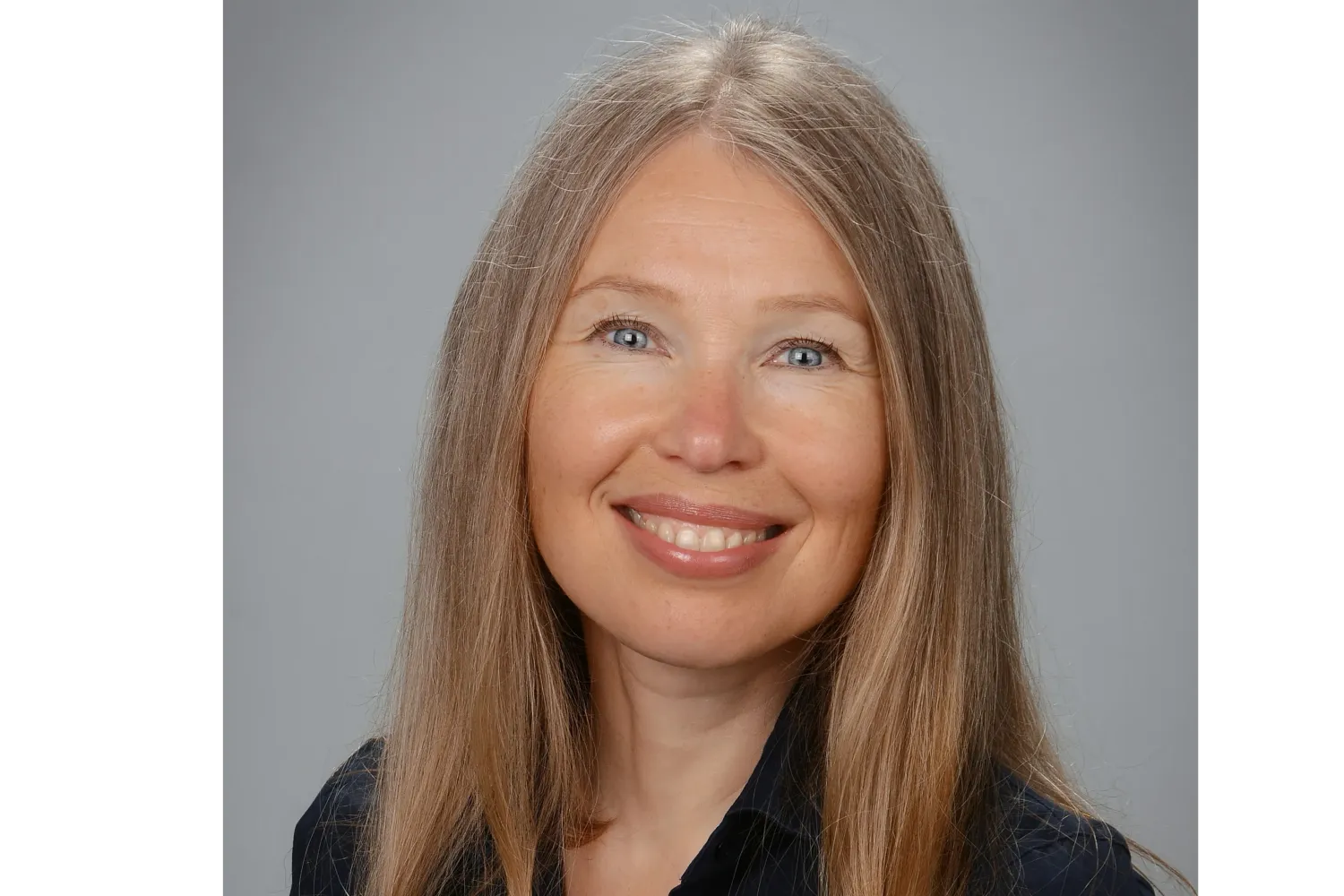
Olga Smirnova, Max Born Institute, Germany
Olga graduated from the Physics Department of the Moscow State University in 1996 and received her PhD there in 2000, continuing as assistant professor. In 2003 she received the Lise-Meitner Fellowship of Austrian Science Foundation (FWF) and joined the Vienna University of Technology as a postdoctoral fellow. In 2005 she moved to the National Research Council (NRC) in Ottawa, Canada, where she became a permanent staff scientist in 2006. In 2009 she received the SAW award of the Leibniz society and moved to the Max Born Institute to establish her own Strong Field Theory research group, which she continues to lead.
Since 2016 she also holds full professorship at the Technical University Berlin. In 2010 Olga has received the Karl-Scheel-Preis of Physikalischen Gesellschaft zu Berlin, in 2020 she has received the Ahmed Zewail Award in Ultrafast Science & Technology of the American Chemical Society and in 2022 Mildred Dresselhaus Prize and Guest Professorship at Hamburg University.
Olga’s current research focuses on imaging and control of ultrafast electron dynamics in atoms, solid state materials, and molecules, especially chiral molecules. Her research has been supported by the Horizon Europe ERC advanced grant ULISSES. She is coordinating the EU MSCA Doctoral Network “Ultrafast Chirality for Science and Technology”.
Prof. Smirnova is the recipient of an Eddie Goldenberg Research Chair of Canada in Ultrafast Chirality for Health, Environment and Quantum Technologies, held at the University of Ottawa starting in 2027.
Tutorial speakers
Lilian Childress, McGill University, Canada
Lilian is an Associate Professor of Physics at McGill University where she applies concepts of quantum optics and atomic physics to solid-state systems, notably color centers in diamond. Her two decades of work in this field have examined how electronic and nuclear spins in diamond can serve as a platform for quantum networking and quantum sensing. In 2024-2025, she spent a year as Lead Scientist at startup SBQuantum developing diamond quantum magnetometers, returning to McGill to explore scientific questions inspired by challenges encountered in real-world deployment of quantum technology.
Past Plenary Speakers
Florian Marquardt
University of Erlangen-Nuremberg, Germany
Shanhui Fan
Stanford University, USA
Xiaoyi Bao
University of Ottawa, Canada
Alexandra Boltasseva
Purdue University, USA
Zachary Vernon
Xanadu, Canada
Gerd Leuchs
Universität Erlangen-Nürnberg, Germany
Cheng-Wei Qiu
National University of Singapore, Singapore
Lihong V. Wang
California Institute of Technology, USA
Stephanie Simmons
Simon Fraser University, Canada